June 29 2026
Ever wondered what goes into creating a show like Peer Gynt?
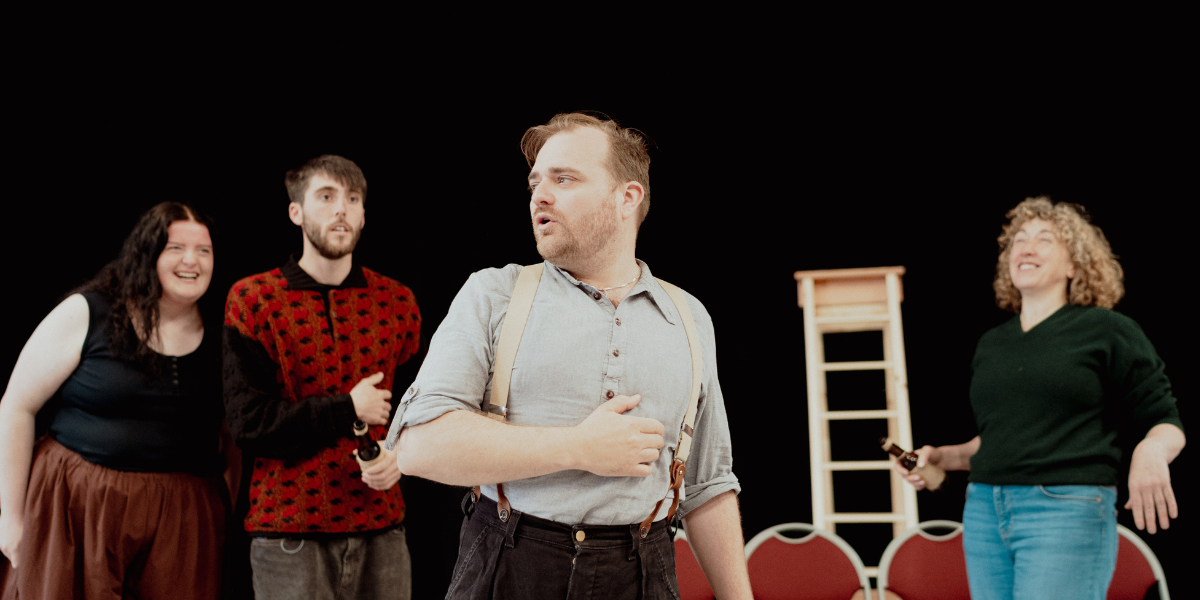
We’ve had great fun watching the show evolve from the early script read throughs and workshopping scenes, to rehearsals, dress rehearsals and live shows on tour.
The rehearsal room is a hive of activity … the cast start exploring the story and experimenting with different ways of bringing the characters to life. Songs and choreography are learnt alongside the scenes, with plenty of trial and error along the way.
As Jowan explains:
“You read the play together and then you start playing with the characters and the story. You also have to learn the songs and the dance moves. We also drink lots and lots of coffee. The music in the show has been really helping me get a sense of the world we’re in as well.”
For Beck, rehearsals are about having the freedom to try things out.
“I love getting things wrong fifty times and having the satisfaction of getting it right the first time. There’s not many situations in life where you can so confidently trial things that don’t work and tweak them until they do, utterly without judgement, and be able to do it with people’s full support and input.”
One of the biggest challenges with Peer Gynt has been condensing such a huge story into a two hour outdoor production, while still keeping the ideas and journey that make the original so memorable.
“The original play is a long, mind bending, reality twisting tale of a million different experiences that somehow combine into one man’s journey. The biggest challenge has been trying to capture Peer’s journey in a much shorter and more accessible timeframe, without compromising the ideas that make this play so special.”
Alongside developing the story, the creative team were also solving practical problems. The set needs to be strong enough to travel across Cornwall, withstand the elements and transform into the many locations that appear throughout Peer’s adventures.
Our solution for this production is the series of especially made wooden boxes. Throughout the show they become furniture, platforms, doorways and storage for props, allowing scenes to change quickly in front of the audience.
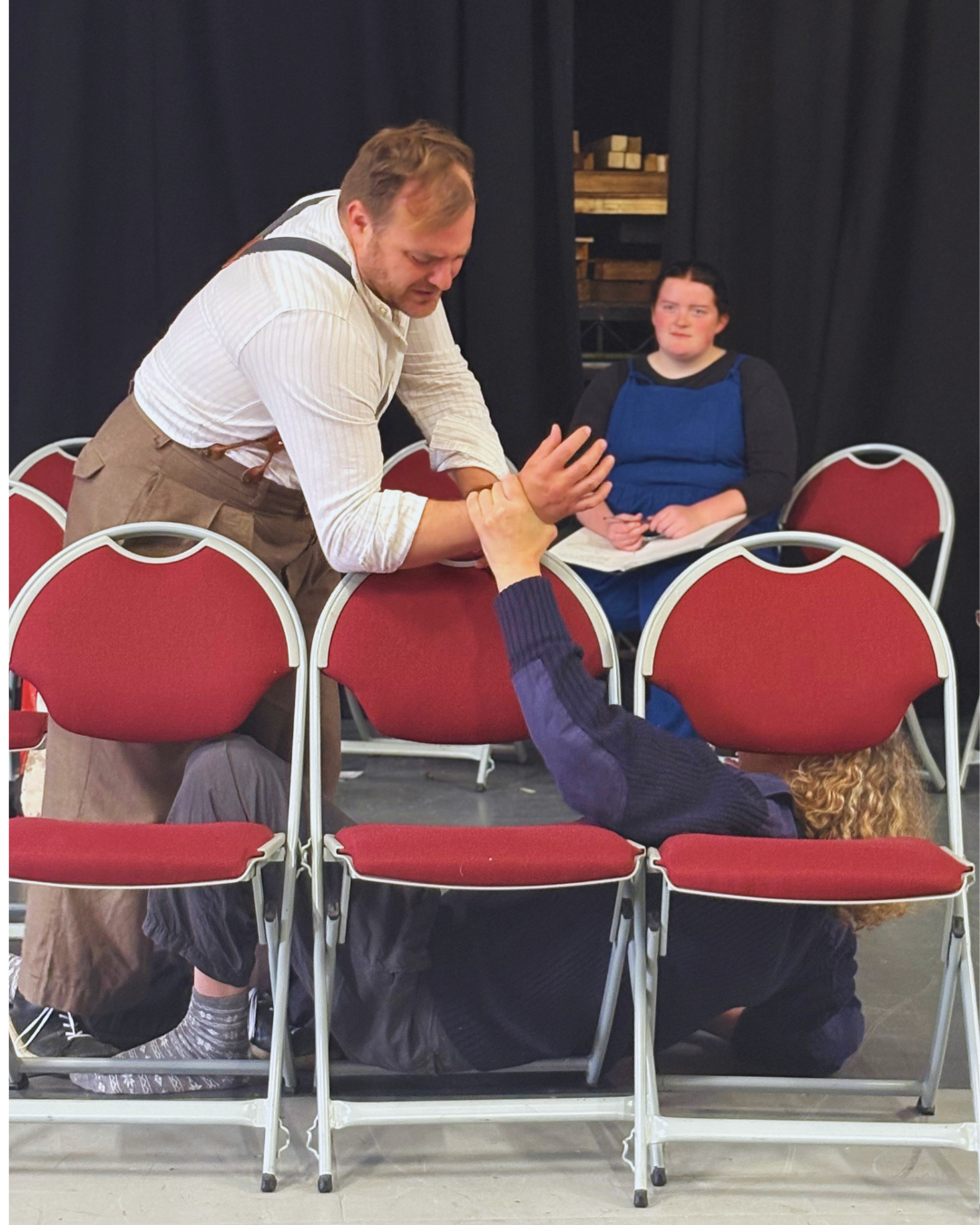
Of course these boxes didn’t exist during early rehearsals. Whatever was available in the rehearsal room stood in for the set. Chairs were often used to represent scenery while scenes were developed. In one early rehearsal, a row of chairs became a coffin. In the finished production, that has become a coffin sized box which, when turned upright, also serves as the doorway to Peer and Solveig’s cottage.
Watching those early ideas develop into the finished production has been fascinating. The audience sees the final result, but every prop, piece of staging and scene has been explored, tested and refined throughout the rehearsal process.
Becky Cottrell Jury
Keep up to date with shows, news and opportunities by signing up and giving us a follow.
As a registered charity, your support makes our work possible. Find out how you can help us create more of the shows you love.
Unit 3, Jubilee Wharf
Commercial Road
Penryn
TR10 8FG

Gwariva Miracle yw aluseneth artys hag adhyskans
Miracle Theatre is an arts and education charity
Thank you to our funders